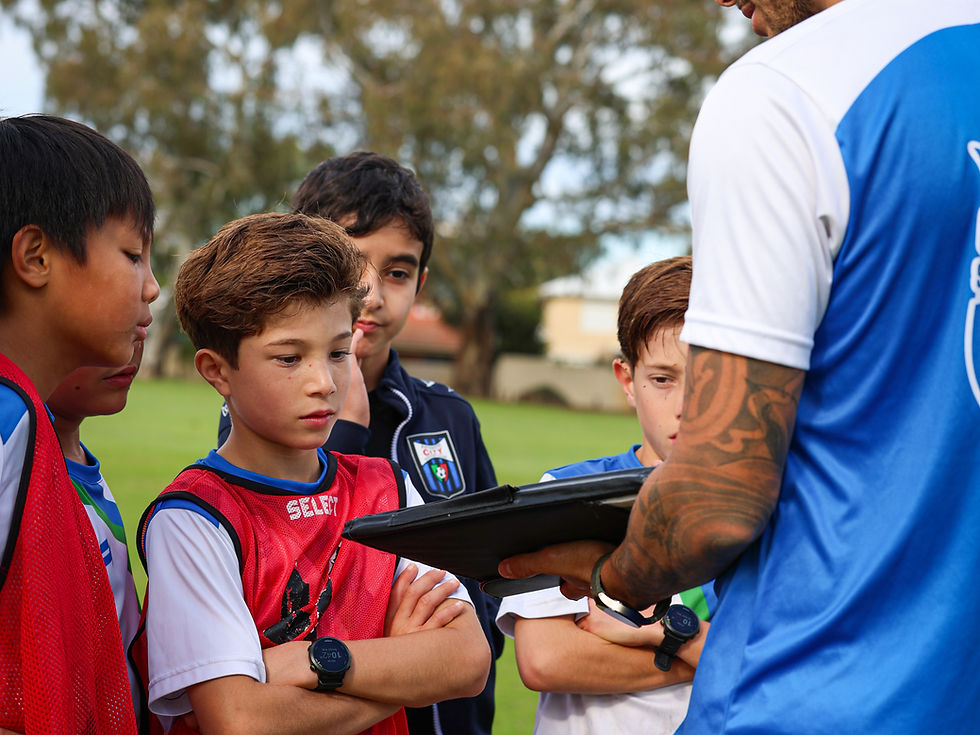
Bridging the Gap: How to Turn Training Pitch Success into Match Day Performance
We've all seen it: a young player who looks like an absolute maestro on a Tuesday night in training—sharply executing drills, firing passes into feet, and playing with total freedom—only to look completely ghost-like come Saturday morning.
The match day environment introduces a completely different set of variables. Crowd noise, referee whistles, aggressive opponents, and the psychological weight of the scoreboard can cause a player to retreat into their shell, second-guess their instincts, and play with hesitation.
Translating midweek potential into match day performance isn't about hoping everything clicks on the weekend. It comes down to structured physical preparation, targeted mental focus, and training that genuinely mirrors the chaotic realities of a real match.
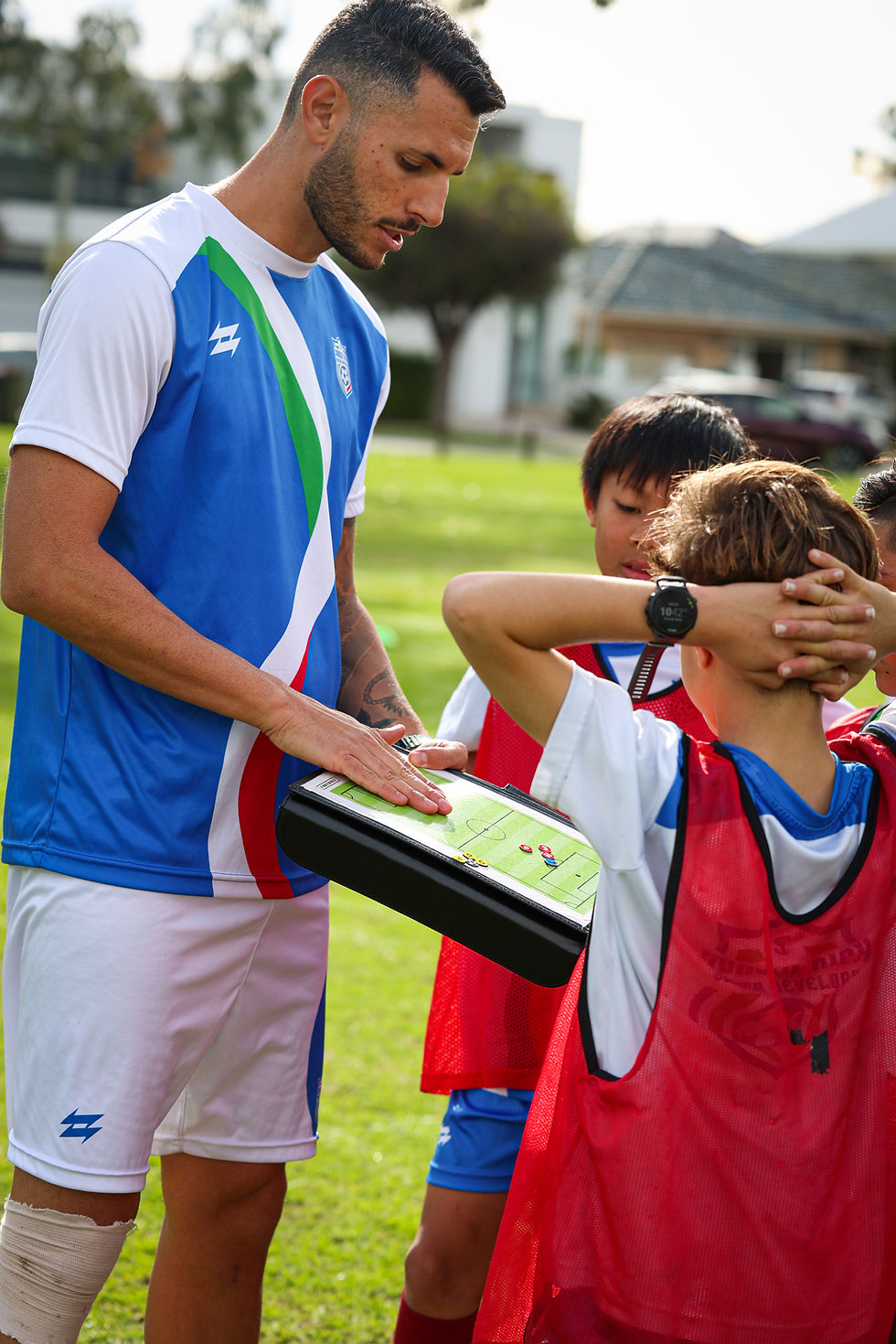
Training Must Mirror Match day Reality
If midweek sessions consist entirely of predictable, uninterrupted drills—where players pass around stationary cones with zero opposition—they will naturally struggle when a defender charges them down on match day.
To build genuine match readiness, training must incorporate high-density decision-making under realistic pressure:
Receiving under physical contact: Learning to feel the defender on your back and shield the ball before making a turn.
Scanning under time constraints: Developing the habit of checking shoulders before the ball arrives, so the next action is already mapped out.
Match-tempo execution: Passing, dribbling, and striking at the exact speed required on the weekend, rather than at a leisurely practice pace.
Transition speed: Switching instantly from attacking focus to defensive recovery the split-second possession changes hands.
When players encounter these exact scenarios hundreds of times during the week, match day stops feeling overwhelming—it simply feels like a continuation of practice.
Streamlining the Mind: The Rule of Two Focus Points
One of the biggest obstacles to a young player's match performance is cognitive overload. When parents, team coaches, and teammates pile on a laundry list of instructions right before kickoff, players end up overthinking every move instead of playing on instinct.
Instead of trying to execute a dozen tactical commands, young players perform best when given one or two simple, actionable focus points for the match:
Midfielder: "Scan your shoulder twice before receiving, and look to play forward whenever space allows."
Winger: "Attack your defender 1v1 in the final third, and track back immediately on turnover."
Defender: "Keep an open body shape to see the whole pitch, and communicate early with your full-backs."
Clear, bite-sized goals give a player something tangible to anchor their performance to, keeping their mind calm and focused regardless of the scoreline.
The Pre-Match Routine: Priming the Body Without Fatigue
Physical preparation in the 24 to 48 hours leading up to a match is about creating sharpness, not building fitness. Over-training late in the week leaves young legs feeling heavy and sluggish on Saturday morning.
A smart pre-match routine focuses on neurological priming and mobility:
Activation over exhaustion: Short, sharp acceleration bursts and dynamic mobility drills to fire up the nervous system without draining energy reserves.
Familiar fueling: Sticking to tested, familiar meals and staying consistently hydrated through the day prior—never experimenting with new foods on match morning.
Sleep hygiene: Prioritizing quality sleep two nights before the game, as match-eve nerves can sometimes disrupt Friday night rest.
The Parent's Role: Creating a Safe Runway
For parents on the sidelines, the most effective contribution to match day performance happens before and after the game. Arriving at the pitch with plenty of time eliminates frantic rushing, allowing the child to settle their nerves and focus.
Crucially, resist the urge to deliver a tactical lecture in the car on the way to the ground. A calm, supportive environment on the drive in—and a relaxed, non-judgmental debrief on the way home—gives players the emotional safety net they need to play with courage and take creative risks on the pitch.
Accelerating Match Readiness with Coach Nick 9
While team training focuses heavily on squad patterns and general fitness, 1-on-1 and small-group sessions at Coach Nick 9 target individual match readiness. We simulate real match pressure, refine positional mechanics, and help young Perth players develop the mental composure and physical sharpness needed to perform at their absolute best when the referee blows the whistle.