Why Solo Football Training Helps Team Practice for Kids
TL;DR: Team training is vital for learning tactics, but solo backyard practice is where technical mastery is forged. Training alone allows a young player to log hundreds of extra touches, iron out weak-foot flaws without embarrassment, and build independent confidence.
The Touch Gap: 15 minutes of individual wall-passing creates more repetitions than a two-hour team session.
The Ownership Shift: Solo practice teaches players to take charge of their own athletic progress.
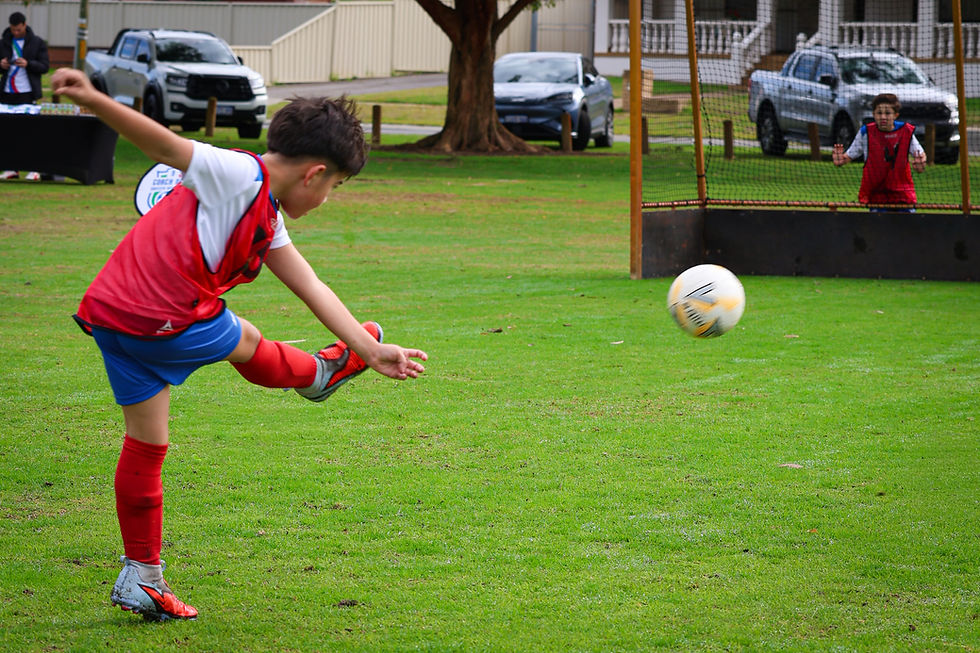
If you head down to any local junior football club in Perth on a weeknight, you will see the same routine: thirty kids packed onto a crowded pitch, waiting in long lines for their turn, and sharing a couple of coaches' attention.
While club training is essential for learning team tactics, it has a massive flaw: in a standard one-hour session, an individual player rarely touches the ball for more than two or three minutes.
If a young player relies only on team practices, their skill progression will inevitably plateau. The hard truth of development is that the kids who dominate on Sunday mornings aren't out-training their teammates during club sessions—they are out-working them in the backyard, alone.
The Simple Math of solo Backyard Training
To understand why solo football training is a complete development shortcut, look at the volume of repetitions.
When a child trains alone with a football and a brick wall, there are no queues, no distractions, and no teammate misplacing a pass. Every ball struck comes right back. Ten minutes of continuous solo wall-work yields over 300 targeted touches.
This density of repetition rapidly builds muscle memory. When a child doesn't have to look down at their feet to find the ball, their head stays up, their decision-making speed doubles, and match-day panic disappears.
4 Core Skills Carved Out in Solo Practice
When you strip away the structure of a team session, a young player is forced to develop an independent skill set:
Ruthless Weak-Foot Development: In a team setting, kids hide their weaker foot because they are terrified of making mistakes in front of their mates. Solo practice provides a consequence-free environment to drill their weaker side until it feels completely natural.
Absolute Ball Manipulation: Spending 10 minutes performing close-control dribbling and sharp turns inside a tiny cone grid forces a player to master all surfaces of both boots.
Independent Problem-Solving: Without a coach constantly shouting instructions from the sidelines ("Pass here! Turn there!"), a child training alone has to self-correct and learn how the ball reacts to their touch.
Self-Discipline: Lacing up your boots and heading into the backyard when you could be playing video games builds a deep work ethic. This drive is what separates average local players from elite division athletes.
Minimal Gear, Maximum Output
You don't need expensive rebound nets or a perfectly flat, full-sized pitch to improve. Some of the greatest players in football history built world-class control in tight streets and small backyards.
The ultimate solo training kit is incredibly basic:
[One Ball] + [One Brick Wall] + [Four Cones] = The Perfect Technical Sandbox
A solid brick wall or garage door acts as the perfect, unforgiving training partner. It passes the ball back exactly as hard as it is struck, instantly testing the player's soft touch, reaction speed, and body positioning.
How Parents Can Support the Grind
Your role as a parent isn't to stand in the yard acting as a strict coach. Pushing too hard from the sidelines is the fastest way to cause athletic burnout.
Instead, the most impactful thing you can do is help them build a simple, consistent routine:
Praise the Effort, Not the Talent: Instead of saying, "You were the best player on the pitch today," try: "I can see how much your first touch has improved because of the extra work you've been doing against the wall this week."
Keep it Short and High-Density: Encourage them to aim for just 10 to 15 minutes of highly focused individual work per day. Short, daily bursts keep the brain engaged and prevent physical fatigue.
The Bottom Line
Team training teaches a child how to play within a system, but individual practice teaches them how to master the ball. You cannot build a confident, thinking footballer if they only touch the ball when their club schedule dictates it.
By encouraging your child to take ownership of their development through structured solo practice, you give them the ultimate competitive advantage: an independent mindset that allows them to command the pitch with absolute authority.
Ready to Upgrade Your Child's Home Training Structure?
If your child has the drive to train alone but needs a professional, age-appropriate blueprint to ensure they are practicing the right habits, let's get started. We design custom home-training exercises during our private 1-on-1 and small-group sessions across Perth, giving your child the exact tools they need to turn home practice into dramatic match-day results.


