10 Dynamic Mobility Exercises for Quickness, Agility, and Speed
TL;DR: Dynamic mobility exercises are essential for building a fast, responsive young footballer. Performing active movement drills right before training opens up tight hips, wakes up the nervous system, and improves balance. This directly translates to sharper turns, faster reaction times, and better protection against joint injuries.
The Pre-Game Fuel: Dynamic drills increase blood flow and joint lubrication before kickoff.
The Core Target: Focus heavily on the ankles, hips, and upper back for ultimate agility.

If you look closely at the most agile youth players in Perth's junior leagues, their speed doesn't just come from strong leg muscles. It comes from fluid joints. They can drop their hips, switch directions instantly, and reach for low interceptions smoothly because their bodies move without restriction.
While traditional stretching relaxes muscles after a hard session, dynamic mobility work activates the nervous system and prepares your child's joints to handle explosive match-day intensity.
The Pre-Match Pivot: Why Static Stretching Must Wait
Many young players still arrive at weekend games and immediately sit on the grass to hold static stretches. Modern coaching science shows this can actually reduce their explosive sprinting power.
Before a match or a hard 1-on-1 development session, the body needs to wake up, not relax. Dynamic mobility exercises involve moving through active positions rather than holding them still. This process lubricates the joints with synovial fluid (the body's natural WD-40) and fires up the neural path from the brain to the muscles, reducing awkward, stiff movements during the first half.
10 Essential Mobility Exercises for Young Players
Incorporate these 10 dynamic exercises into your child's pre-training routine. Have them perform each movement smoothly with full control, never rushing or forcing the position.
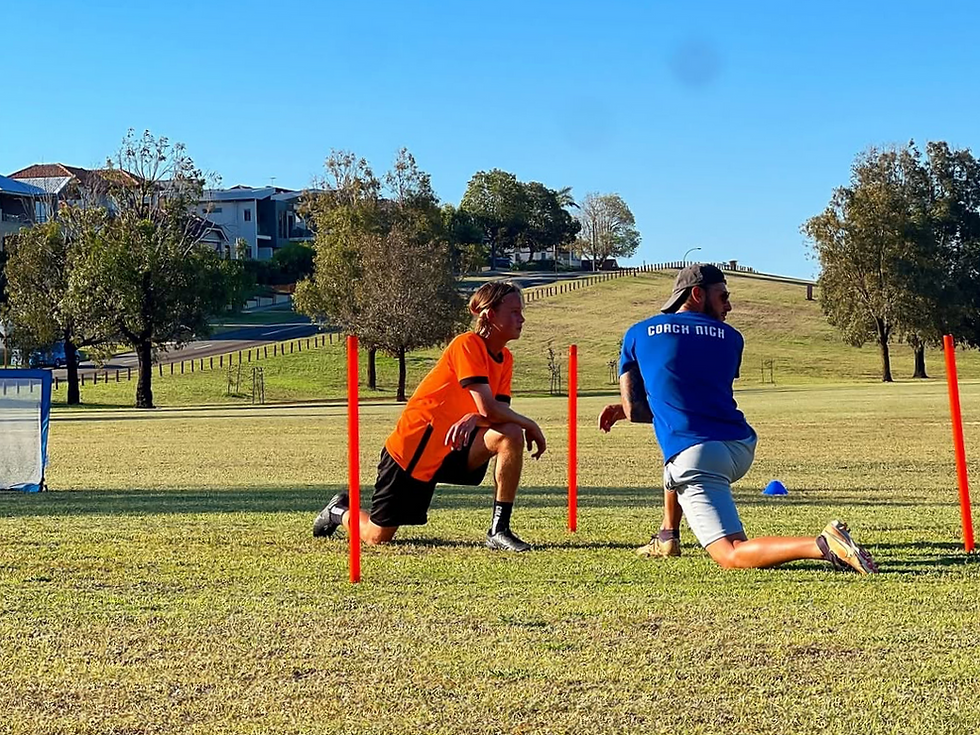
1. The World’s Greatest Stretch
The Movement: Take a long lunge forward, place the opposite hand on the grass, and rotate the other arm up toward the sky, looking at the hand.
Why it matters: An all-in-one primer that unlocks the hips, hamstrings, and mid-back simultaneously.
2. Hip Openers (Open & Close the Gate)
The Movement: While jogging slowly forward, lift the knee up high and swing it out to the side ("open"). Reverse the movement on the next step ("close").
Why it matters: Directly prepares the hip socket for the twisting and turning demands of close-quarters midfield play.
3. The Deep Squat Hold with Rock
The Movement: Drop down into a deep squat, keeping the heels flat on the grass and chest up. Gently shift the body weight slightly from side to side.
Why it matters: Builds lower body balance and relieves tension in the lower back and hips after long school days.
4. Walking Lunges with a Torso Rotation
The Movement: Step forward into a steady lunge, then smoothly twist the upper body over the front leg before stepping into the next lunge.
Why it matters: Replicates the exact physical coordination needed to shield a ball from an oncoming defender.
5. Ankle Mobility Rocks
The Movement: Place one foot forward near a wall or fence. Keeping the heel firmly flat on the grass, gently rock the knee forward past the toes.
Why it matters: Improves ankle flexibility, which is crucial for sharp deceleration, cutting, and accelerating on hard ground.
6. Controlled Leg Swings (Front-to-Back & Lateral)
The Movement: Hold onto a post or teammate, and swing one leg smoothly forward and back, then side-to-side across the body.
Why it matters: Dynamically wakes up the hamstrings and groin muscles without reducing explosive power.
7. Thoracic Rotations (T-Spine Openers)
The Movement: On hands and knees, place one hand behind the head. Bring that elbow down toward the opposite wrist, then rotate it high toward the sky.
Why it matters: A flexible upper back allows for natural arm-pumping speed and better balance when challenging for headers.
8. Cossack Squats (Side-to-Side Lunges)
The Movement: Stand with a very wide stance. Lower the hips down deeply toward the right heel while keeping the left leg completely straight, then switch sides.
Why it matters: Develops exceptional lateral control, which is vital for defenders jockeying quick wingers.
9. The Controlled Bear Crawl
The Movement: Move forward on hands and feet with the knees hovering just an inch above the grass, keeping the back completely flat like a tabletop.
Why it matters: Connects upper and lower body coordination while building core strength and shoulder stability.
10. The Dynamic Groin Rocker
The Movement: Kneel on one knee with the other leg extended straight out to the side. Gently rock the hips backward toward the heel and return forward.
Why it matters: Prepares the inner thigh complex for the sudden stretching forces of long-range passing and slide tackling.
When to Schedule This Routine
To maximize physical development, dynamic mobility must become a predictable habit rather than a sporadic fix.
Timing | Strategy | The Focus |
15 Minutes Before Training/Match | Full Dynamic Routine | Run through 5-8 repetitions of these exercises as the main component of the pre-game warm-up. |
Morning of a Match | Light Mobility Flow | Spending 5 minutes on a few gentle hip and ankle movements at home removes morning stiffness before arriving at the ground. |
The Bottom Line
Agility isn't just something children are born with, it is a physical trait that can be trained and unlocked.
By prioritizing dynamic mobility before your child touches a football, you ensure their joints can move freely and safely through every rapid turn, slide tackle, and sprint. Help them build these habits early, and watch their sharpness transform on game day.