7 Small-Sided Soccer Drills to Fix Your Child's First Touch and Speed of Thought
Updated: May 31
TL;DR: Small-sided soccer drills inside tight spaces are the ultimate training tool for accelerating youth player development. By forcing kids to operate with limited time and immediate opposition, these seven specific exercises systematically build an elite first touch, automatic scanning habits, and rapid mental processing speeds that translate directly to match-day success.
The Core Focus: High-repetition, high-intensity scenarios with zero hidden downtime.
The Result: Players develop the composure to retain possession under heavy physical pressure.
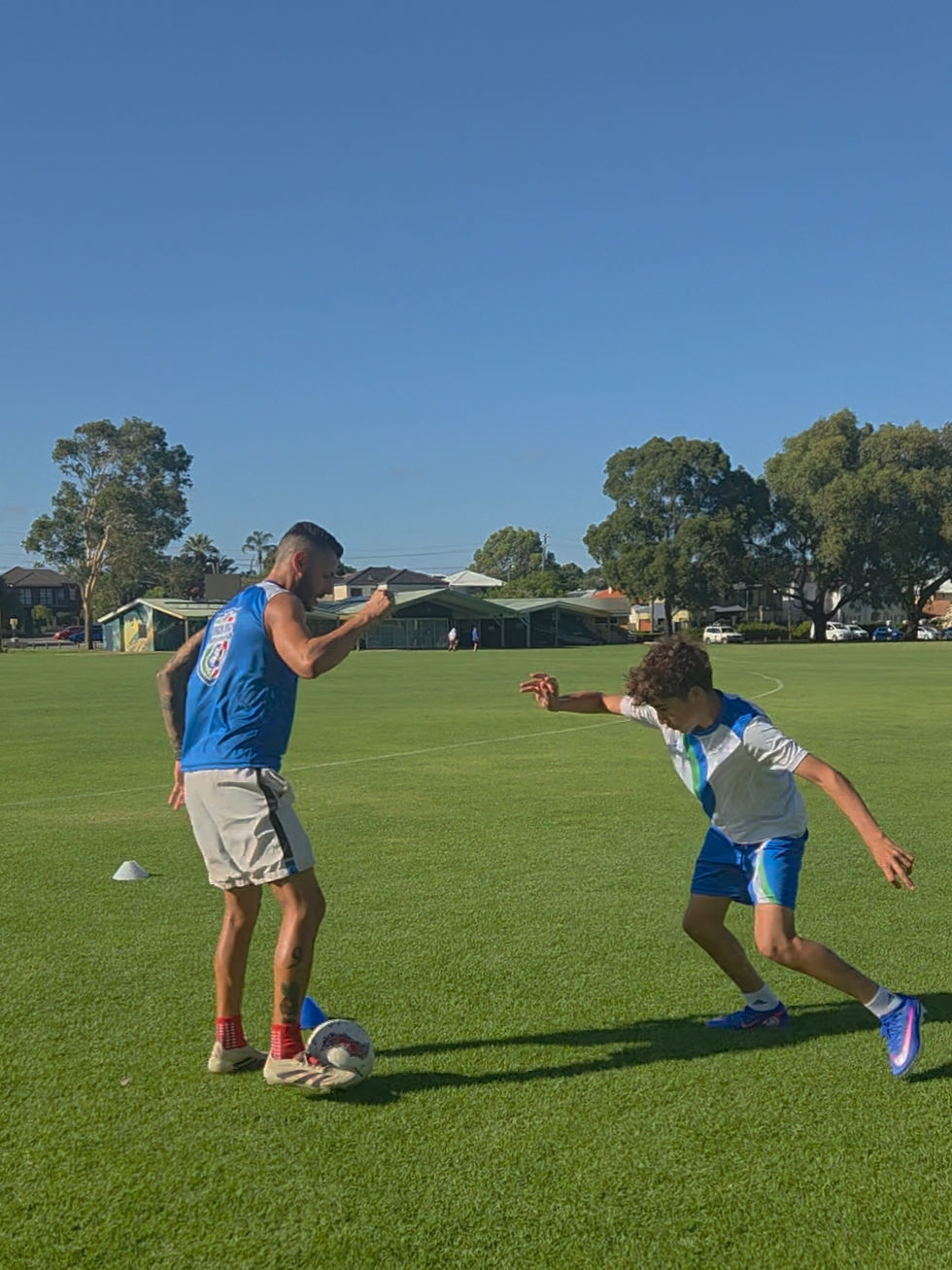
If you are looking for the fastest way to upgrade a young player's football skills, you don't need a massive pitch or hours of endurance running. You just need a few cones, a small grid, and immediate defensive pressure.
In modern soccer, the best players aren't just the most athletic; they are the ones who can handle the ball inside a telephone box without panicking.
When space shrinks, technical flaws can no longer be hidden behind raw running pace. If your child is struggling with a heavy first touch or hesitating when swarmed by opponents, running these seven
The 7-Drill Technical Blueprint
These seven foundational exercises compress the playing grid, forcing your child’s brain and feet to adapt to the real-world spatial limits of a competitive match.
1. The 3v1 Rondo
Three players keep possession while one defends in a small grid.
⚽ Focus: quick passing + awareness
2. 2v2 Small-Sided Game
Play in a tight area with mini goals.
⚽ Focus: decision making under pressure
3. One-Touch Passing Drill
Players must pass the ball using only one touch.
⚽ Focus: speed of play
4. Tight Dribbling Grid
Players dribble inside a small square while avoiding others.
⚽ Focus: close control
5. Receive and Turn Under Pressure
Player receives the ball with a defender behind them.
⚽ Focus: first touch + shielding
6. 4v2 Possession Game
Four attackers keep the ball away from two defenders.
⚽ Focus: movement + support
7. Transition Game (Attack to Defend)
After losing the ball, players must immediately defend.
⚽ Focus: reactions + awareness
By the Numbers: Why Small-Sided Drills Fast-Track Development
To understand why elite academies worldwide rely on this setup, look at the sheer density of involvement. In a standard full-field junior match or massive team scrimmage, a single player might only touch the ball a handful of times.
Small-grid sessions completely transform that metric across a single hour of work:
5x More Ball Touches: Players receive more passes, touches, and turns in 10 minutes of a small-sided drill than in a full 60-minute match.
Constant Decision-Making: Instead of waiting for the play to travel down the field, pressure arrives every 2 to 3 seconds, forcing rapid cognitive growth.
Zero Downtime: There are no long lines, no standing around shivering on a cold Perth evening, and no hiding out on the wings.
The Bottom Line
If a young athlete only ever practices drills where they have unlimited time and green grass, they will always look panicked when the intensity spikes on the weekend.
By making these seven small-sided drills a predictable part of their training routine, you give them a massive technical advantage. They stop running away from pressure, stop slashing blindly at the ball, and start dominating tight spaces with complete composure.
Ready to Sharpen Your Child's Speed of Thought?
If you want your child to master close-quarters control, build an unshakeable first touch, and unlock true match-day confidence under pressure, let's get started. We design highly competitive, ability-matched small groups across Perth specifically engineered around these advanced small-sided training systems. Reach out today to secure the perfect next step for your young player!


