Training in Tight Spaces: The Secret to Developing Smart, Fast-Thinking Footballers
TL;DR: Tight-space football training forces young players to think, scan, and execute skills at twice their normal speed. By compressing the training grid, players can no longer rely on raw physical pace; they are forced to develop an elite first touch, sharper spatial awareness, and calm composure under pressure. This directly accelerates their overall football IQ and decision-making on match day.
The Core Benefit: Eliminates the panic response when swarmed by opposing defenders.
The Tactical Shift: Teaches players how to read passing lanes and manipulate space with their body positioning.

Walk down to any local football pitch in Western Australia on a Sunday morning, and you will spot a common pattern. Junior players look completely comfortable when they have five metres of open space around them. But the moment an opposing team presses hard, closes the gap, and surrounds them, panic sets in. The ball gets hacked away wildly, or possession is lost immediately.
The reality of modern football is that open space is a luxury that disappears the higher a player climbs in the competitive ranks.
If a young athlete wants to make the leap into elite representative squads or junior state leagues, they must learn to survive and thrive when there is nowhere to run. Training inside highly compressed, tight spaces is the absolute fastest way to replace game-day panic with calm, calculated composure.
Replicating the Chaos of the Modern Game
Traditional team practices often feature massive, sweeping drills where players run in straight lines across half a pitch. While this looks organized, it fails to prepare a child for the actual reality of a competitive match.
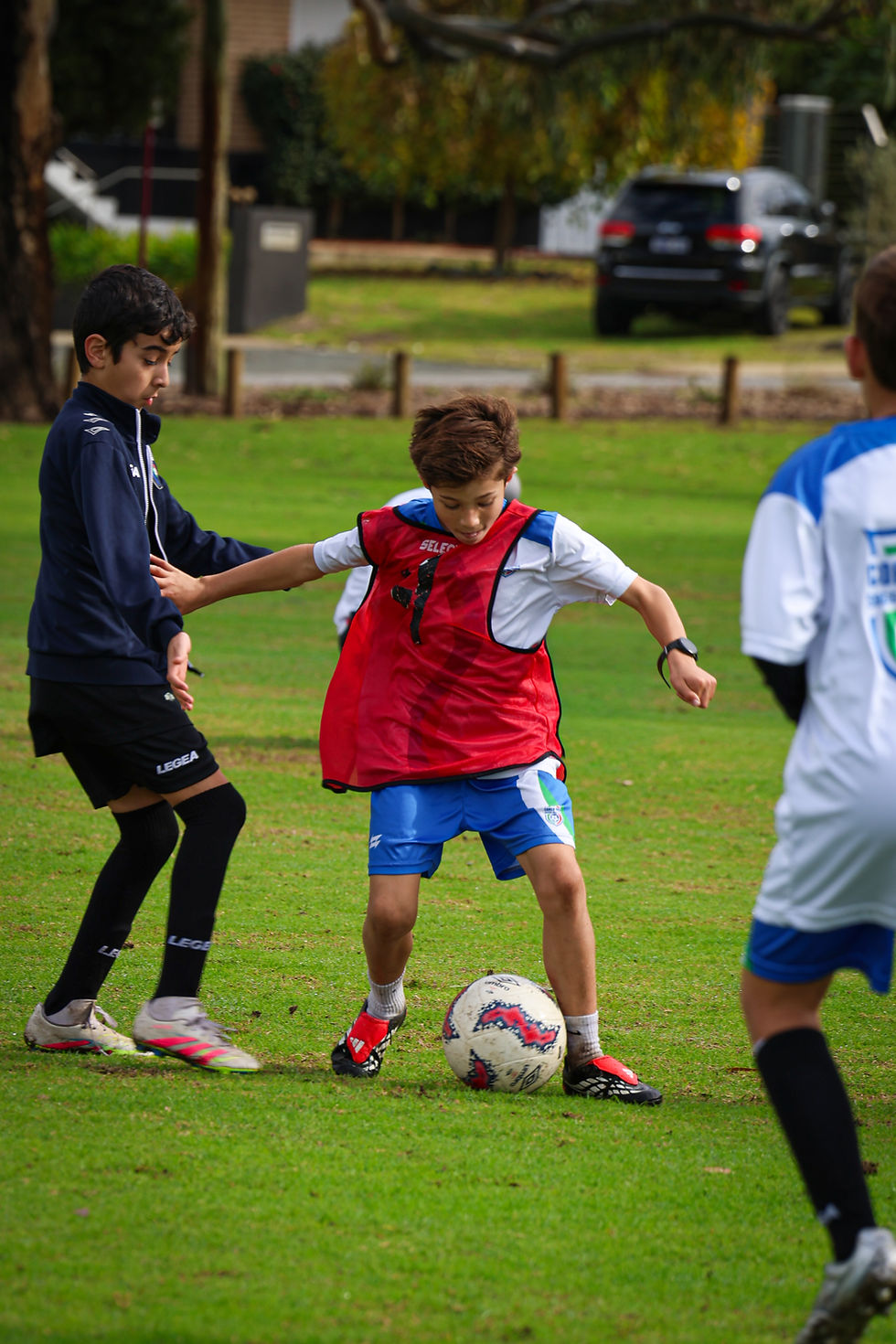
A real football game is a chaotic series of micro-battles in highly congested areas. A midfielder trying to turn in the centre circle, a winger stuck near the corner flag, or a defender playing out from their own box are all operating under intense spatial restriction.
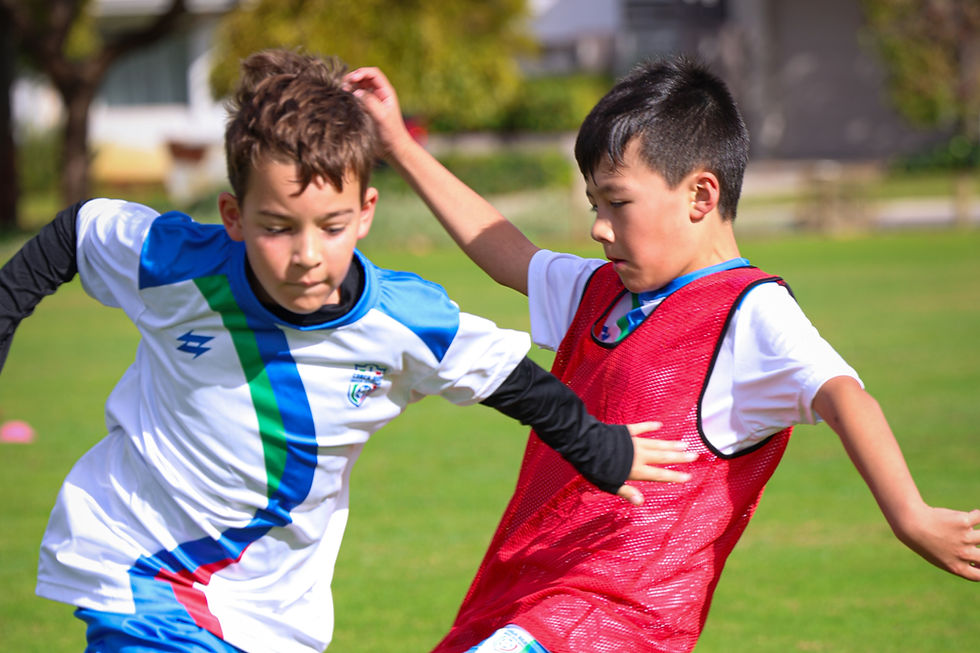
By deliberately shrinking the size of our training zones, we introduce high-density game realism. The player is forced to face constant defensive pressure, immediate transitions, and a lack of time. This physical constraint forces the brain to adapt, rewiring a child’s processing speed so that a real 11v11 match suddenly feels slow and easy by comparison.
5 Elite Skills Carved out of Small Spaces
When you take away open green grass, a young player can no longer just kick the ball and outrun their opponent. They must think their way out of trouble. This compression systematically refines five core attributes:
The Directional First Touch: The ball must be killed instantly and guided away from the approaching defender's path on the very first contact.
Proactive Scanning: Players learn that looking down at their feet is a death sentence. They build the habit of checking their shoulders before the ball arrives to map out their escape route.
Intelligent Support Angles: Teammates quickly realize that standing still makes them completely useless. They learn to move fluidly into open windows of space to support the ball carrier.
Pinpoint Passing Accuracy: In a tight grid, a pass that is just six inches offline will be intercepted. It forces kids to value possession and strike the ball with perfect weight and intent.
Rapid Transition Reactions: The second possession changes hand, the brain must snap from attacking to defending without a single split-second of hesitation.
Why Small Groups are the Only Way to Train Tight Spaces
You cannot successfully run high-intensity, tight-space drills with a large squad of sixteen kids. It quickly descends into an uncoordinated bottleneck where players stand around waiting for turns or constantly bump into each other.
Capping the group size at a maximum of six players changes everything.
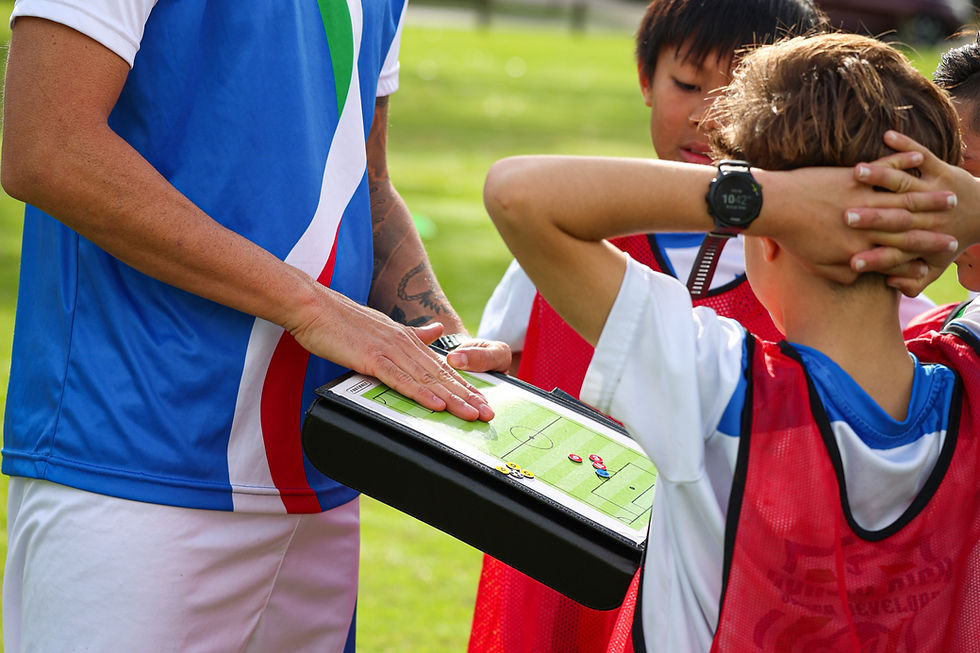
In a small group, every child is deeply involved in every single sequence. There is absolutely nowhere to hide, no time to drift out of the play, and a massive volume of ball touches per minute. The intensity stays high, and the coach has the space to step in, freeze the play, and give immediate, actionable technical feedback to each individual child.
The Bottom Line
Football intelligence isn't a genetic trait your child is either born with or lacking. It is a physical and mental skill set built through repetitive exposure to pressure.
If your child wants to stop looking hesitant during high-stakes matches, they need to stop training in wide-open, consequence-free environments. By making small-grid, high-density drills a core part of their routine, you give them the tools to stay calm in the storm, outsmart aggressive defenders, and command the pitch with complete authority.
Give Your Child the Strategic Advantage
Is your child ready to bridge the gap between training drills and real match-day composure? We specialize in designing elite small-group and 1-on-1 environments across Perth that explicitly focus on small-space mastery and fast decision-making. Reach out today to discuss how we can elevate your child's game speed!