The Age Debate: When Should Young Footballers Start Strength Training?
TL;DR: Young footballers can safely begin basic strength training as early as age seven or eight, provided the entire focus is on bodyweight control, coordination, and movement quality. At the youth level, strength work has nothing to do with lifting heavy weights; it is about teaching the nervous system to stabilize joints, balance on one leg, and land safely from a jump.
The Growth Myth: Proper resistance training does not stunt growth; it actually strengthens bones and tendons.
The Real Goal: Building an athletic foundation of body control before ever introducing gym weights.
It is one of the most common and debated questions among soccer parents: “Is my child too young to start strength training?”
Many parents hear the word "strength" and immediately picture heavy weights, intense gym settings, and the old, disproven myth that resistance work will stunt a child's growth. Because of these misconceptions, many young athletes miss out on a massive development window.
The truth from modern sports science is clear: young footballers can--and should--start building their physical strength much earlier than most parents expect. However, the secret lies entirely in how that training is defined and executed.

Redefining "Strength" for a Budding Athlete
If we want young players to compete safely in fast-moving leagues, we have to look at strength through a coaching lens rather than a bodybuilding lens. For an eight- or eleven-year-old player, strength is simply the ability to control their own body weight against gravity and opposition.
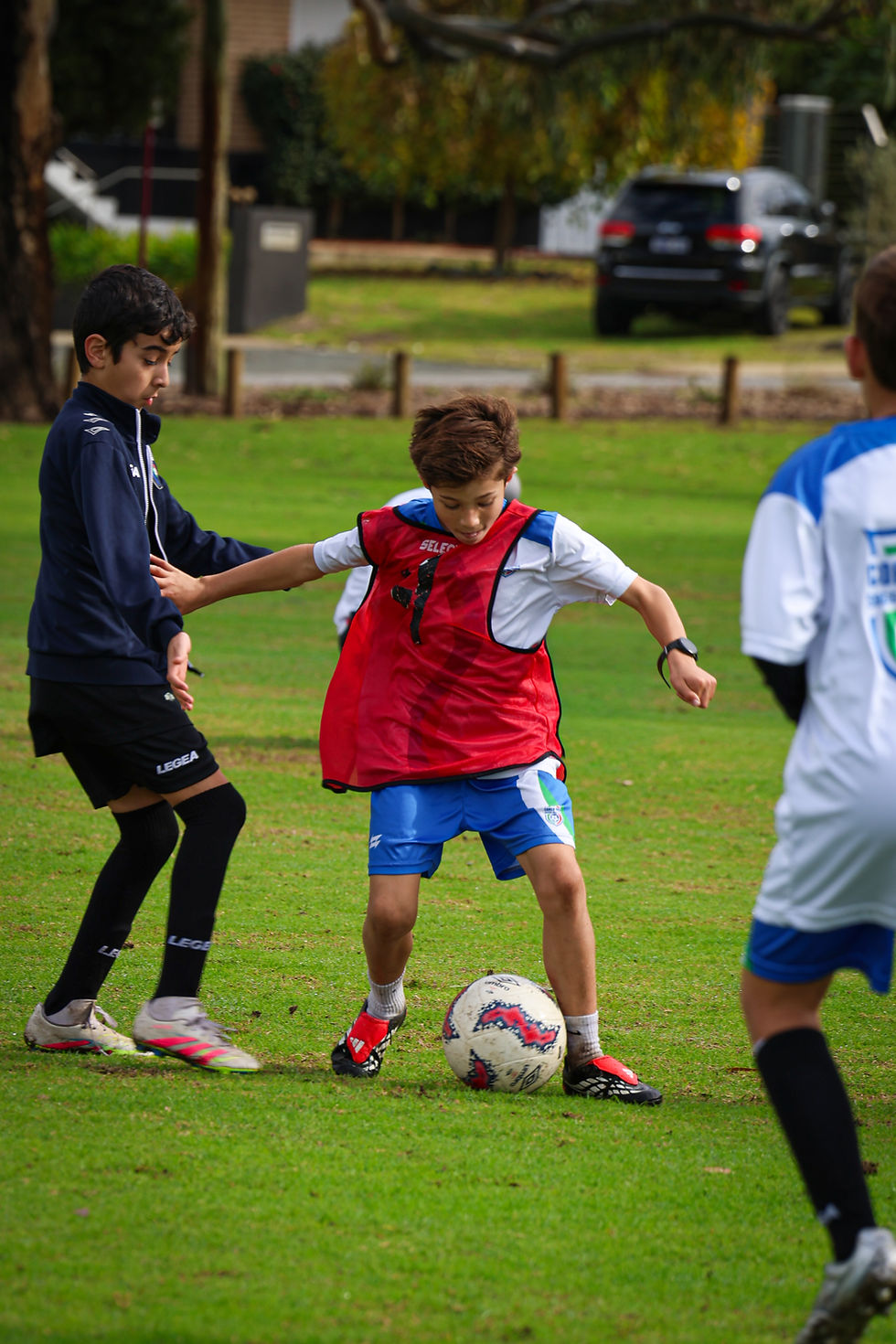
When a junior player pushes off a defender to shield the ball, decelerates suddenly to change direction, or holds their balance while striking a moving ball with their weak foot, they are displaying functional football strength.
If a child does not train these movement patterns deliberately, they will rely purely on raw momentum. This leads to sloppy, uncoordinated execution on the ball and subjects their developing joints to unnecessary, dangerous stress.
The Age-Appropriate Progression Pathway
To keep development safe and highly effective, strength work must carefully match your child's physical maturity and growth phase.
[Ages 6-9: Coordination] ➔ [Ages 10-13: Technique & Form] ➔ [Ages 14+: Resistance & Power]
Phase 1: Junior Foundations (Ages 6 to 9)
The Focus: Play, balance, and body awareness.
What it looks like: Complete bodyweight movements hidden inside fun drills. We use animal crawls (like bear crawls for upper body stability), basic single-leg balancing games, and teaching them how to squat deeply without tipping over. The goal here is simple coordination.
Phase 2: The Golden Window (Ages 10 to 13)
The Focus: Flawless movement mechanics.
What it looks like: This is the age where rapid growth spurts can make kids temporarily clumsy as their bones grow faster than their muscles. We introduce structured bodyweight lunges, planks for core stability, and strict landing mechanics. We teach them to lock down their ankles and knees so they don't cave inward.
Phase 3: Youth Performance (Ages 14 to 17)
The Focus: Introducing external resistance and power.
What it looks like: Once a player has completely mastered their own body weight, we can gradually introduce light resistance bands, medicine balls, and basic gym movements. This phase mirrors the intense physical demands of senior transition football and builds explosive match-day power.
The Hidden Benefit: Building Bulletproof On-Pitch Confidence
The physical changes that come with structured strength work directly impact a child’s mental game. A common reason young players look hesitant or "drop their heads" during matches is that they feel physically overwhelmed by larger or more aggressive opponents.
When a child learns how to plant their feet firmly, lock their core, and use their body positioning effectively, their sports anxiety vanishes.
They stop shying away from 50/50 challenges. They become highly comfortable absorbing physical contact, protecting the ball under pressure, and driving out of tight spaces with conviction. That physical resilience gives them the mental freedom to express their technical skills creatively.
Balancing the Week: How to Add Strength Without Overloading
You do not need to sign your child up for a separate gym membership to get these results. The most effective way to build youth football strength is by weaving short, high-focus movement blocks directly into their existing technical training.
Training Day | Integration Strategy | The Family Benefit |
During Pre-Match Warm-Ups | Spend 5-10 minutes on core stability and single-leg balance holds before touching the ball. | Primes the muscles and nervous system to work efficiently right from the opening whistle. |
During Mid-Week Development | Combine a bodyweight strength movement (like a lunge) directly with a technical skill (like a first touch). | Teaches the brain to execute precise soccer skills even when the body is under mild physical tension. |
The Bottom Line
Waiting until your child is sixteen to introduce "strength training" means missing out on the most critical years of their athletic development.
By framing strength as body control, movement quality, and joint stability, you give your child a massive head start. You aren't just protecting their developing body from preventable overuse injuries, you are giving them the physical structure, balance, and athletic confidence they need to truly thrive at the next level of the game.
Ready to Build a Stronger Foundation?
If you want to introduce safe, professional movement mechanics and structural strength training into your child's weekly routine, let's map out a plan. We integrate age-appropriate physical development directly alongside elite ball mastery in all our private 1-on-1 and small-group coaching sessions. Get in touch today to discuss the perfect pathway for your young athlete!