Finding the Sweet Spot: How Often Should Your Child Do 1-on-1 Football Training?
TL;DR: The optimal frequency for 1-on-1 football training depends entirely on a player's developmental age and current training load. Rather than stacking up endless sessions, the goal is to find a sustainable balance that supports team commitments without causing physical fatigue.
Here is a quick breakdown of recommended frequencies by age group:
Ages 6–9: One short, fun-focused session per week to build foundational ball familiarity.
Ages 10–13: One consistent session per week to lock in elite technical habits during their golden learning years.
Ages 14–17: One to two performance-focused sessions per week, tailored to their specific pitch position.
Senior Players: Highly flexible, targeted sessions used to fix technical gaps or maintain match sharpness.
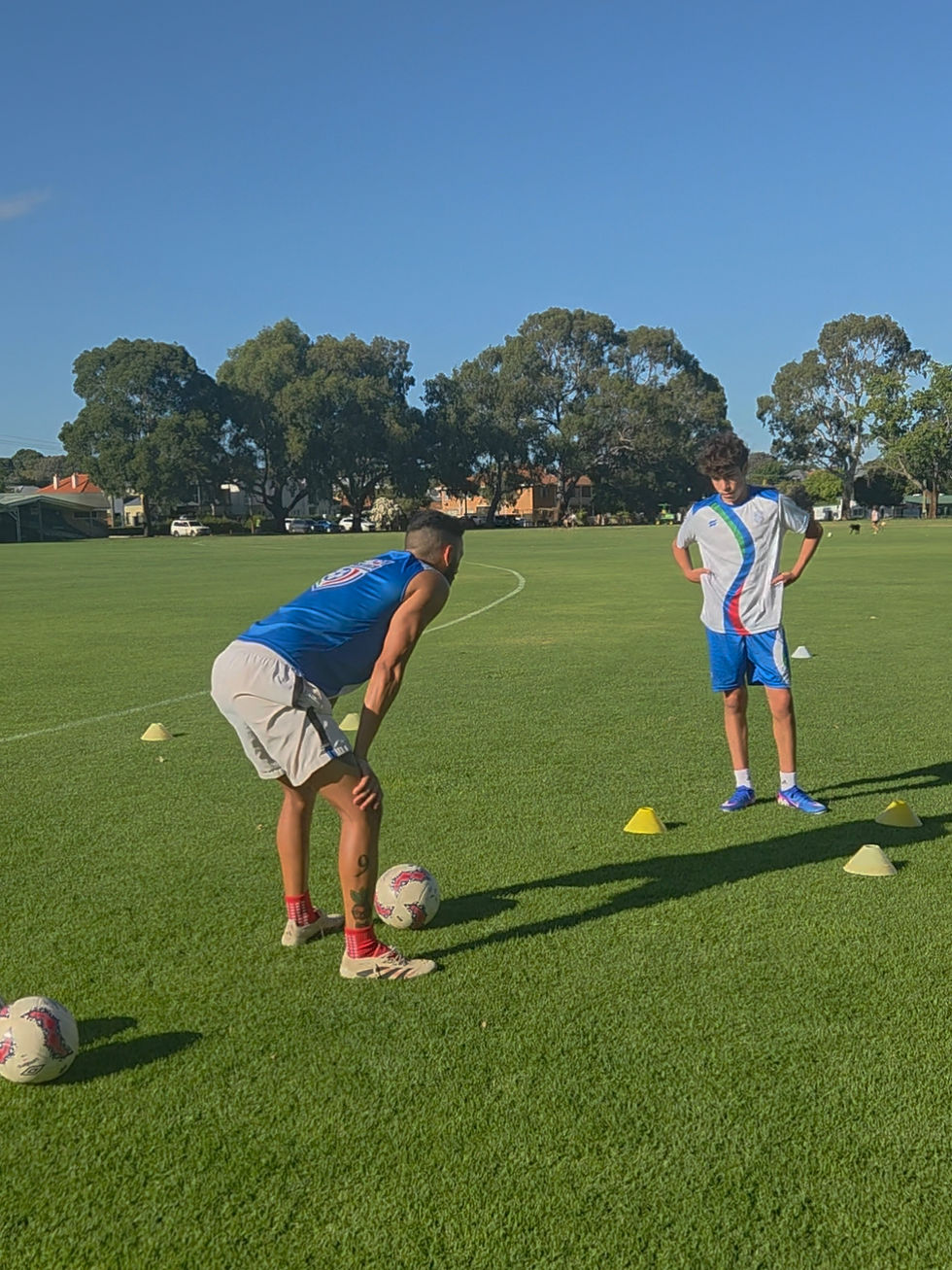
When parents decide to invest in private football coaching, the very next question is almost always: “How much is too much?” It is a completely fair question. Between school commitments, club training nights, and weekend matches, the family calendar fills up fast.
You want to give your child a competitive edge, but you also want to avoid physical burnout and keep the sport genuinely fun for them.
The truth is, there is no one-size-fits-all answer. The ideal frequency changes dramatically depending on your child's age, growth phase, and competitive level. Understanding how to structure their week ensures you get the absolute maximum return on your investment while keeping your young athlete healthy and hungry to play.
The Golden Rule: Quality Trumps Quantity Every Single Time
Before looking at the age brackets, it is vital to clear up a common myth: more training does not automatically equal a better player.
A young player who is dragged to four or five unfocused, exhausting training sessions a week will quickly develop "lazy" technical habits simply because their body and brain are tired. They start dragging their feet, hitting passes with poor posture, and losing their mental sharpness.
One high-quality, high-repetition 1-on-1 session per week -- where the player is completely fresh, highly motivated, and receiving undivided expert feedback -- is infinitely more valuable than three sessions completed while running on empty.
Guidelines by Age Group: The Development Pathway
Junior Foundations (6 to 9)
Recommended: 1 session pw max
At this stage, football must be pure enjoyment. The absolute core goal of a private session here is to make the ball feel like an extension of their foot. We focus on basic motor skills, core balance, and coordination through engaging, fast-moving drills.
Intensity matters far less than building a deep, positive connection with the game.
The Golden Learning Window (10 to 13)
Recommended: 1 to 2 sessions pw
This is the most critical developmental phase in a young player's life. This is the age where lifelong movement habits and technical muscle memory are locked into the nervous system. Sessions focus heavily on first-touch direction, passing accuracy under mild pressure, and spatial awareness (learning to scan the field before receiving the ball).
Good coaching during these years can shape how a player performs later on.
Performance & Position Tuning (14 to 17)
Recommended: 1 to 2 sessions pw
Training now shifts toward high-intensity, match-realistic scenarios. Sessions are customized entirely around the player's specific position on the pitch. If they are a defender, we work on body positioning and jockeying; if they are a striker, we focus on sharp turns and clinical finishing in tight spaces. We also emphasize decision-making at high speed and managing physical contact safely.
This is where individual training can have a strong impact on confidence and match performance.
Senior & Academy Competitors
Recommended: Flexible, based entirely on individual goals and match schedules
For mature players, 1-on-1 work is an elite maintenance tool. It is used to systematically iron out specific technical weaknesses, maintain sharp footwork, or complete low-impact, tactical recovery work during heavy competitive blocks.
Balancing the Weekly Ledger: Individual vs. Team Training
Private coaching is never meant to replace team training; it is designed to supercharge it. A healthy, progressive soccer week balances the distinct benefits of both environments:
Team Training Sessions | Private 1-on-1 Sessions |
Tactical Shape & Structure: Learning where to move as a unit when the team wins or loses possession. | Pure Ball Mastery: Developing the flawless technical skill required to execute those team tactics. |
Group Communication: Building chemistry, understanding teammates' runs, and organizing set-pieces. | Individual Confidence: Eliminating the fear of making mistakes, ensuring they actively demand the ball in games. |
Match Realism: Adapting to the unpredictable nature of an 11v11 environment. | Micro-Detail Feedback: Spending 15 straight minutes fixing a tiny flaw in their kicking or body alignment. |
Contrary to the old worry that individual training makes kids selfish, it actually makes them much better teammates. A player who can confidently control a difficult pass, protect the ball under heavy pressure, and make a quick, calm decision is a player that everyone else wants to share the pitch with.
The Bottom Line
Player development is a marathon, not a sprint. Flooding a child's week with endless, exhausting sessions is a fast track to physical fatigue and mental burnout.
By committing to a consistent, well-planned 1-on-1 routine tailored to their specific age and schedule, you give your child the space to learn, the repetitions to improve, and the confidence to truly shine on match day.
Let’s Customise Your Child’s Training Week
Every young athlete's journey in Perth is unique. If you want to figure out the perfect structural balance for your child's current club schedule, or if you simply want an honest assessment of their technical foundations, feel free to reach out and get in touch today for a casual chat!


